AnAI Uses AI Localization to Address the Dubbing Gap Limiting K-Content’s Global Reach
Beyond Post
2025.12.11
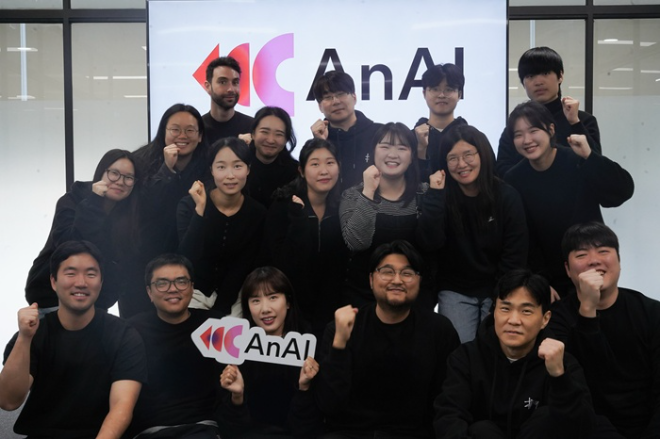
2025.12.11 | Beyond Post
The popularity of Korean content continues through platforms such as Netflix, but differences in viewing culture are less visible within Korea. According to US research firm Morning Consult, audiences in Russia (86%), Germany (76%), Italy (73%), and Spain (67%) largely prefer dubbed content. More than half of viewers in Mexico and Brazil also choose dubbing. In Korea, by contrast, 72% prefer subtitles and only 25% prefer dubbing.
While Korea has a strong subtitle culture, dubbing is the default option in many overseas markets. This has prompted the view that Korean content, despite its global competitiveness, is spreading more slowly in some markets because it does not fully meet local dubbing expectations. AnAI, an AI media solutions company led by CEO Kim Young, is working to address this gap through technology.
Kim, who holds a doctorate in music, encountered the problem while watching Korean dramas with his Canadian wife during his research into AI-generated music and sound. He explained that dubbing is a standard viewing method abroad, whereas subtitles are familiar in Korea, and that insufficient dubbing quality or speed can harm the viewing experience even when the content itself is strong. This concern became the starting point for the company.
Believing that language should not limit access to content, Kim focused on AI dubbing and translation technology, and AnAI grew into a global media localization technology company.
The article reports that AnAI’s technology produced results in international projects during 2025: average language-specific post-production costs fell by 70%, and scheduling preparation became up to three times faster. It also reports validation of quality and alignment technologies, including voice generation using an emotion-and-tone-mapping AI agent and automated time synchronization.
Projects with producers and distributors demonstrated multilingual speech synthesis quality, while some overseas platform projects reported improvements in viewing duration and return visits.
AnAI’s strength is described as an organization combining expertise in content business, audio engineering, AI development, and visual design. This allows technology development, quality verification, and service operations to feed back into one another. The structure helps the team respond to standards required by global broadcast and OTT environments and develop technology that can be applied in production.
AnAI participated in the 2025 Intel InGenius Program under the Around X global corporate collaboration initiative, further developing its multilingual AI dubbing engine and automation pipeline.
Kim described differences in viewing preferences as an opportunity. He said that if AI addresses dubbing’s cost and speed limitations, Korean content can grow further by meeting overseas viewers’ basic expectations.
The article argues that Korea’s subtitle-centered viewing experience is relatively unusual internationally, where audiences often accept dubbing as a more natural viewing method. AI can help narrow that gap and create a foundation for Korean content to reach more language markets.
AnAI plans to expand partnerships with producers and platforms and provide technology infrastructure for global viewing cultures centered on dubbing.